16-Way Parallel Bitcoin Hashing Engine
SystemVerilog • SHA-256 • FPGA-Oriented Architecture
Overview
Designed and implemented a hardware accelerator for Bitcoin’s double-SHA-256 Proof-of-Work hashing algorithm using SystemVerilog. The project includes both serial and 16-way parallel architectures, demonstrating FPGA-oriented cryptographic acceleration, hardware parallelism, and finite state machine based digital design.
The system recreates the core hashing mechanism used in Bitcoin mining and includes a reusable SHA-256 engine, memory-mapped interfaces, self-checking testbenches, and waveform verification.
Key Features
Full double-SHA-256 Bitcoin hashing implementation
Reusable parameterized SHA-256 core
Serial nonce-processing architecture
16-lane parallel SIMD-style hashing architecture
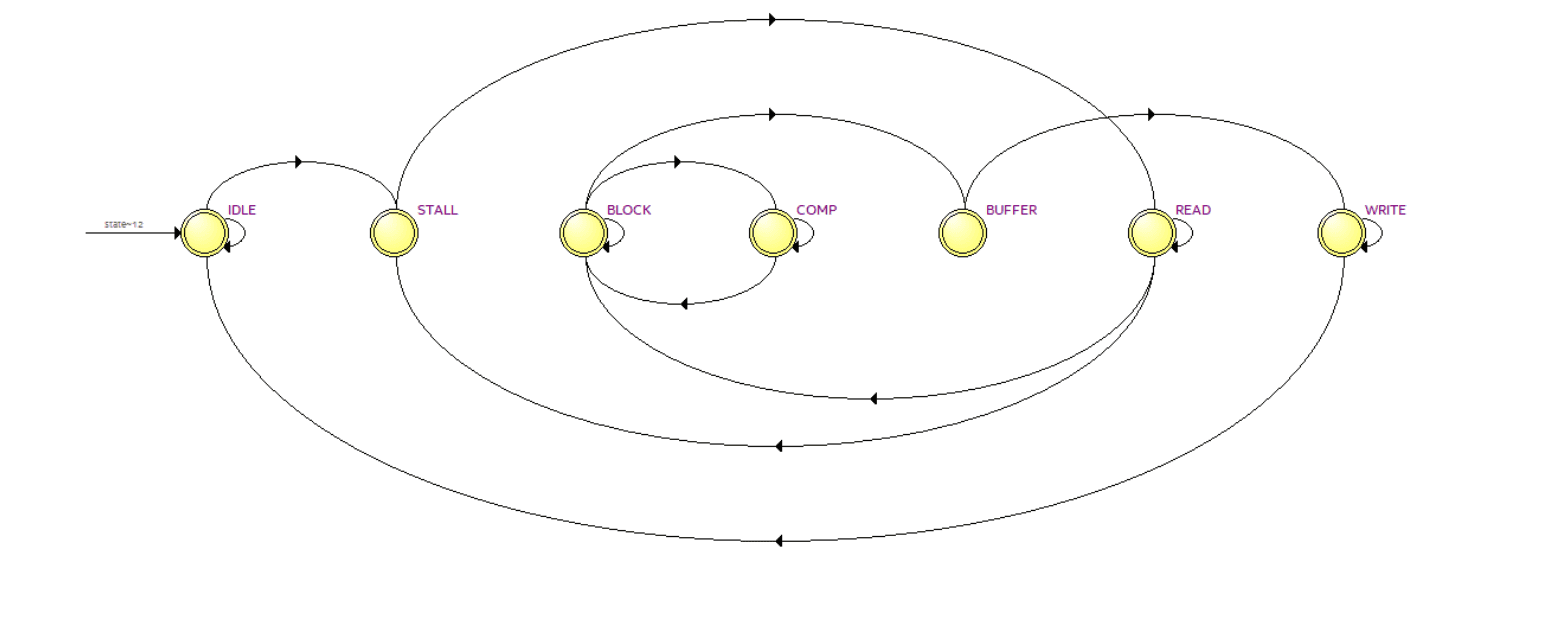
FSM-driven datapath control
Memory-mapped DPRAM interface
Fully synthesizable FPGA/ASIC-compatible RTL
Self-checking verification testbenches
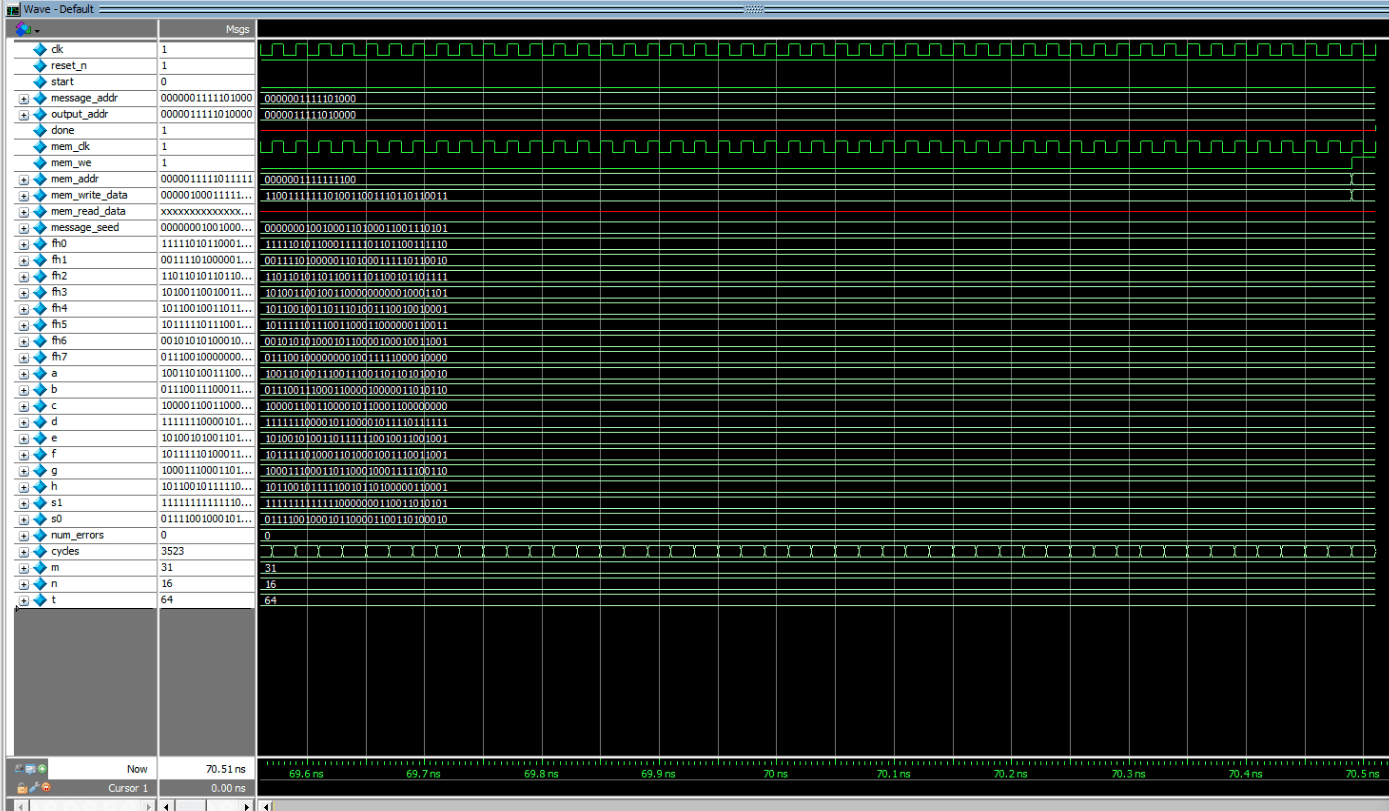
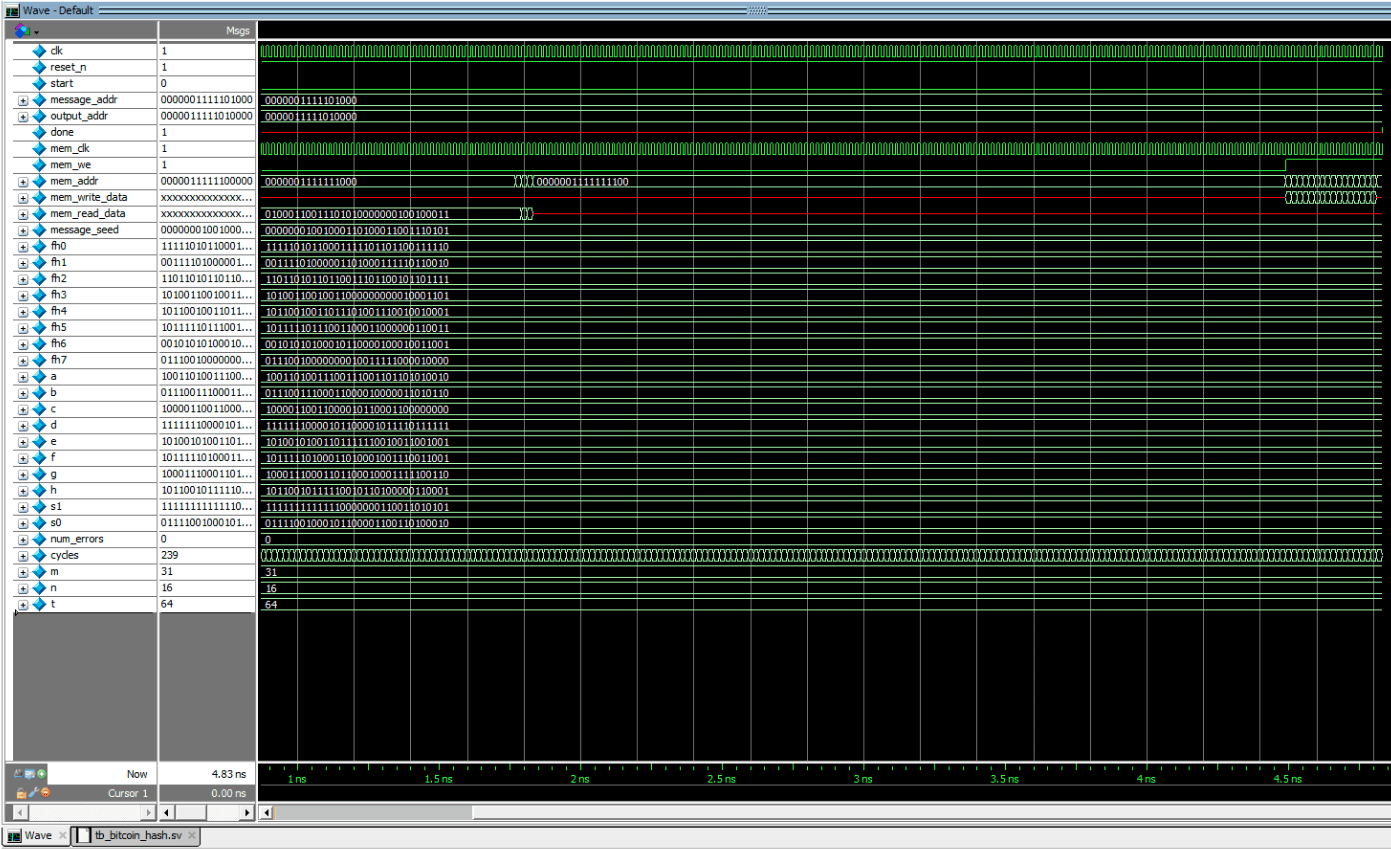
Waveform simulation and timing validation
Technical Highlights
Implemented SHA-256 compression rounds and message scheduling
Designed multi-stage finite state machines for hash orchestration
Built a parallel datapath architecture for simultaneous nonce processing
Developed hardware verification infrastructure with behavioral memory models
Simulated and validated designs using ModelSim/Questa workflows
Optimized architecture tradeoffs between throughput and hardware area
Architectures
Serial Bitcoin Hash Engine
Processes nonces sequentially using a single SHA-256 datapath.
Lower hardware resource usage
Simpler timing closure
Area-efficient FPGA implementation
Parallel Bitcoin Hash Engine
Replicates 16 independent datapaths operating simultaneously.
~16× throughput improvement
SIMD-style architecture
High-performance cryptographic acceleration
Technologies Used
Layer | Technology |
|---|---|
Hardware Description | SystemVerilog |
Simulation | ModelSim / Questa |
Verification | Self-checking Testbenches |
Target Platforms | FPGA / ASIC |
Algorithms | SHA-256 / Bitcoin Double Hashing |
What This Project Demonstrates
Advanced digital hardware design
Cryptographic accelerator development
FPGA-oriented optimization techniques
Hardware parallelism and datapath replication
Low-level understanding of Bitcoin mining internals
RTL verification and waveform analysis